Meme coin trading versus holding as the better way to chase outsized gains
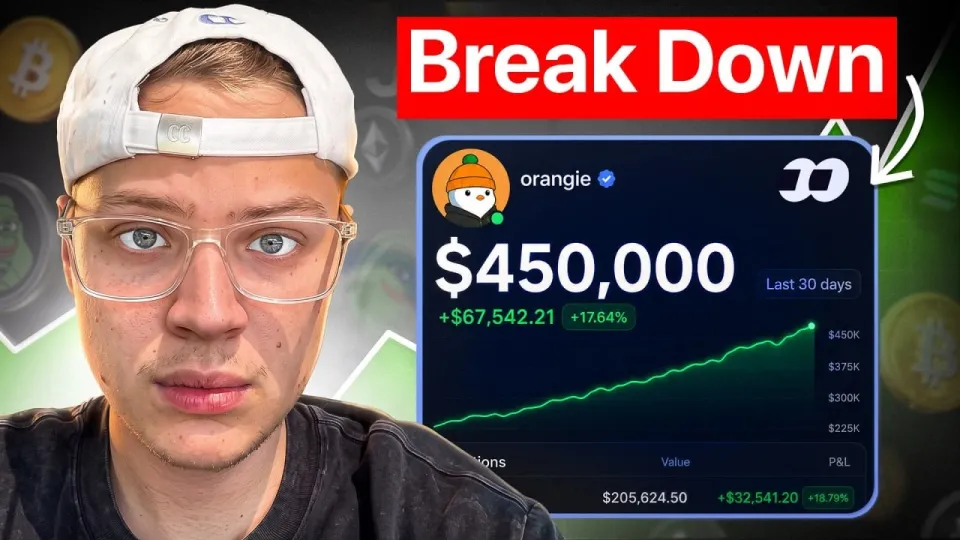
Video: How I Made $450,000 Trading Memecoins in 30 Days
Want articles like this for your own video to promote it on YouTube and Google? Order them through the Telegram bot @sat_sit_bot. Articles with your video embedded are written and posted by the bot itself — on popular topical sites (no ads). Free trial — 50 articles.
Key takeaways
- A meme coin is a token whose price is driven by community attention and narrative rather than cash flow, revenue or a product roadmap.
- Orangie Web3 reports turning $450,000 in 30 days trading memecoins, mostly on Solana, where launch and exit can happen within minutes.
- The realistic outcome distribution is brutal: most launches go to near zero, so a handful of winners must pay for many losers.
- Trading beats holding in this niche because narrative tokens rarely sustain value; entries and exits, not conviction, decide the result.
- Speed and liquidity checks matter more than tokenomics: contract, holder distribution, social momentum and a pre-planned exit.
A meme coin is a cryptocurrency whose value rests on community attention and narrative rather than revenue or a product, which is why trading them actively usually beats holding them long term. If you want the asymmetric upside this niche promises, treat every meme coin as a short-lived trade with a defined exit, not as an investment to marry. That is the core lesson behind Orangie Web3's breakdown, where the channel documents a $450,000 run in 30 days and offers a paid community through the Kaizen Group checkout for traders who want the full workflow.
The distinction matters because the search query "meme coin" covers two very different activities: buying a token and hoping a community carries it for months, or trading momentum for hours and leaving. The first approach depends on luck and narrative durability; the second depends on process, speed and risk control. Below is how the trading side actually works, where the money comes from, and what beginners consistently get wrong.
What a meme coin actually is and why it behaves differently
A meme coin is a token with no cash flow, no treasury and usually no team commitment beyond a launch, so its price is a pure function of attention and liquidity. Dogecoin established the template, but the modern version lives on Solana, where launching a token costs a few dollars and takes minutes. That changes the economics: supply is effectively infinite, so attention becomes the scarce resource and rotation between tokens is constant.
Because there is nothing to value, traditional analysis does not apply. There are no earnings to discount, no roadmap to audit and no balance sheet to read. Instead, traders watch holder counts, buy and sell pressure, social mentions and the behaviour of wallets that entered early. The token is a vehicle for a narrative — a meme, an animal, a joke, a cultural moment — and when the narrative cools, price does not consolidate, it collapses.
Why trading beats holding in this niche
Trading beats holding because meme coin narratives decay faster than any fundamental thesis can develop, and the tokens that survive for years are the rare exception rather than the rule. A holder needs the community to keep growing after the initial spike; a trader only needs the spike. That asymmetry is the entire edge.
The $450,000 result described by Orangie Web3 in a 30-day window is not the product of one perfect pick. It is the product of many attempts with capped downside and a few outsized winners. In practice the model looks like this:
- Size each position so a total loss is survivable — a small fixed percentage of the trading stack.
- Enter early, when liquidity is thin but the narrative is fresh and holder growth is accelerating.
- Take partial profits into strength rather than waiting for a target that may never print.
- Cut the rest without hesitation when volume fades or the chart breaks structure.
- Reinvest only realised gains, never the original risk capital, into the next attempt.
The mechanics of a Solana meme coin trade
A Solana meme coin trade is a sequence of checks and decisions compressed into minutes, and skipping any step is how accounts get wiped. The chain's low fees and fast finality make it the default venue for this activity, but they also make mistakes cheap to repeat and expensive to aggregate. A workable routine:
- Contract check. Confirm the mint address from a reliable source, verify it is not a copy, and look for freeze authority or mint authority still active.
- Holder distribution. A token where a handful of wallets control most of supply is a token where those wallets decide your exit.
- Liquidity depth. Thin pools mean your sell moves price against you; check how much can be exited before slippage explodes.
- Narrative freshness. The best entries happen before the meme is everywhere; once it is on every timeline, you are exit liquidity.
- Exit plan before entry. Decide the invalidation level and the first profit-taking level before the buy confirms.
Tools matter here. Orangie Web3 points viewers to FOMO, the trading platform used in the videos, which bundles charting, wallet flow and execution for Solana tokens. Whatever terminal you use, the requirement is the same: fast execution, readable holder data and no ambiguity about what you are buying.
Why most participants lose money
The brutal math of meme coins is that the majority of launches trend toward zero, so the average participant is funding the minority who exit well. This is not pessimism, it is the structural outcome of near-zero launch costs and infinite supply. Anyone entering the niche should assume most positions fail and plan accordingly.
Three failure patterns repeat. First, size: traders put a meaningful share of capital into a single token and cannot recover from a normal loss. Second, timing: they buy after the move is visible on social media, which is precisely when early wallets distribute. Third, discipline: they refuse to sell a loser because the loss is unrealised, then hold through a 90% drawdown and lose the ability to take the next trade.
The honest framing is that this is a high-variance activity where a single hit can repair many misses, but only if the misses are small. A trader who risks 5% per attempt and loses eight times in a row still has 66% of capital and a clear head. A trader who risks 50% once is finished.
Questions beginners keep asking
Beginners ask the same things repeatedly, and the answers are less glamorous than the highlight reels. The most common concern is speed: explanations of entries, exits and reasoning feel rushed, and viewers want slower walkthroughs of why a specific token was chosen. The practical fix is to replay a single trade, write down the entry thesis, the invalidation level and the exit, then compare it with what actually happened.
Another recurring theme is the role of private groups. Experienced traders share calls, and members act on them within seconds, which is a real informational advantage that solo traders do not have. It does not remove risk — crowded calls also mean crowded exits — but it explains why some participants consistently enter earlier than the public timeline.
A third theme is losing almost everything and then recovering on one position. That pattern is real but survivable only when the losing positions were small. Finally, there is the question of time: how long to learn before committing real capital. The answer is until your process is repeatable on paper, because the market will not slow down for you.
Risk management rules that keep you in the game
Risk management is the only part of meme coin trading that compounds reliably, because it determines whether you survive long enough to catch a winner. Rules that experienced traders converge on:
- Cap any single position at a small percentage of total capital, and treat it as already lost at entry.
- Scale out in tranches: recover the initial stake first, then let the remainder run.
- Never add to a losing position; averaging down on a decaying narrative is how small losses become terminal ones.
- Keep a written log of every trade with entry, exit and reason, and review it weekly.
- Stop trading after a defined drawdown for the day or week; tilt is more expensive than any bad token.
These rules do not make the activity safe. They make the variance survivable, which is the most anyone can engineer in a market driven by attention.
Useful links
- Kaizen Group membership and checkout: https://whop.com/checkout/plan_GTFkEFh0JFpU8?a=orangie
- FOMO trading platform referral: https://fomo.family/r/orangie
- Orangie Discord community: https://discord.gg/memecoins
- Instagram: https://www.instagram.com/orangieyt/
Final takeaway
The meme coin niche rewards traders who treat tokens as short-lived narrative vehicles and punish those who treat them as investments. The $450,000 in 30 days reported by Orangie Web3 is a headline result built on many small losses, a few large winners and strict position sizing, not on a secret formula. If you take part, define your exit before your entry, keep each bet small enough to lose, and judge yourself on process rather than on any single outcome. The channel Orangie Web3 is the author of this breakdown and the source of the trading walkthroughs referenced here; if you want the full workflow, start with the Kaizen Group checkout.
Questions & answers
Is trading meme coins more profitable than holding them?
For most participants, trading is the more rational approach because meme coin value depends on attention that fades quickly. Holding assumes a community keeps growing after the initial spike, which is rare. Trading caps the damage when the narrative dies and lets a few winners pay for many small losses.
How much capital do you need to start trading meme coins?
You can start with a small amount, but the size of your positions matters more than the total. Risk a fixed small percentage per token so a total loss does not end your ability to take the next trade. Traders who risk large shares of their stack on one launch rarely recover from a normal loss.
Why do some traders seem to buy every coin before it moves?
They often operate inside private groups where calls are shared and acted on within seconds, which is a genuine informational advantage. That edge does not eliminate risk, because crowded calls also produce crowded exits. Solo traders should assume they will enter later and size positions accordingly.
What should a beginner check before buying a Solana meme coin?
Verify the mint address, check whether mint or freeze authority is still active, review holder concentration and confirm liquidity depth. Then decide your invalidation level and first profit target before the buy executes. Skipping these checks is the most common reason accounts get wiped.
Source: How I Made $450,000 Trading Memecoins in 30 Days · Markdown version